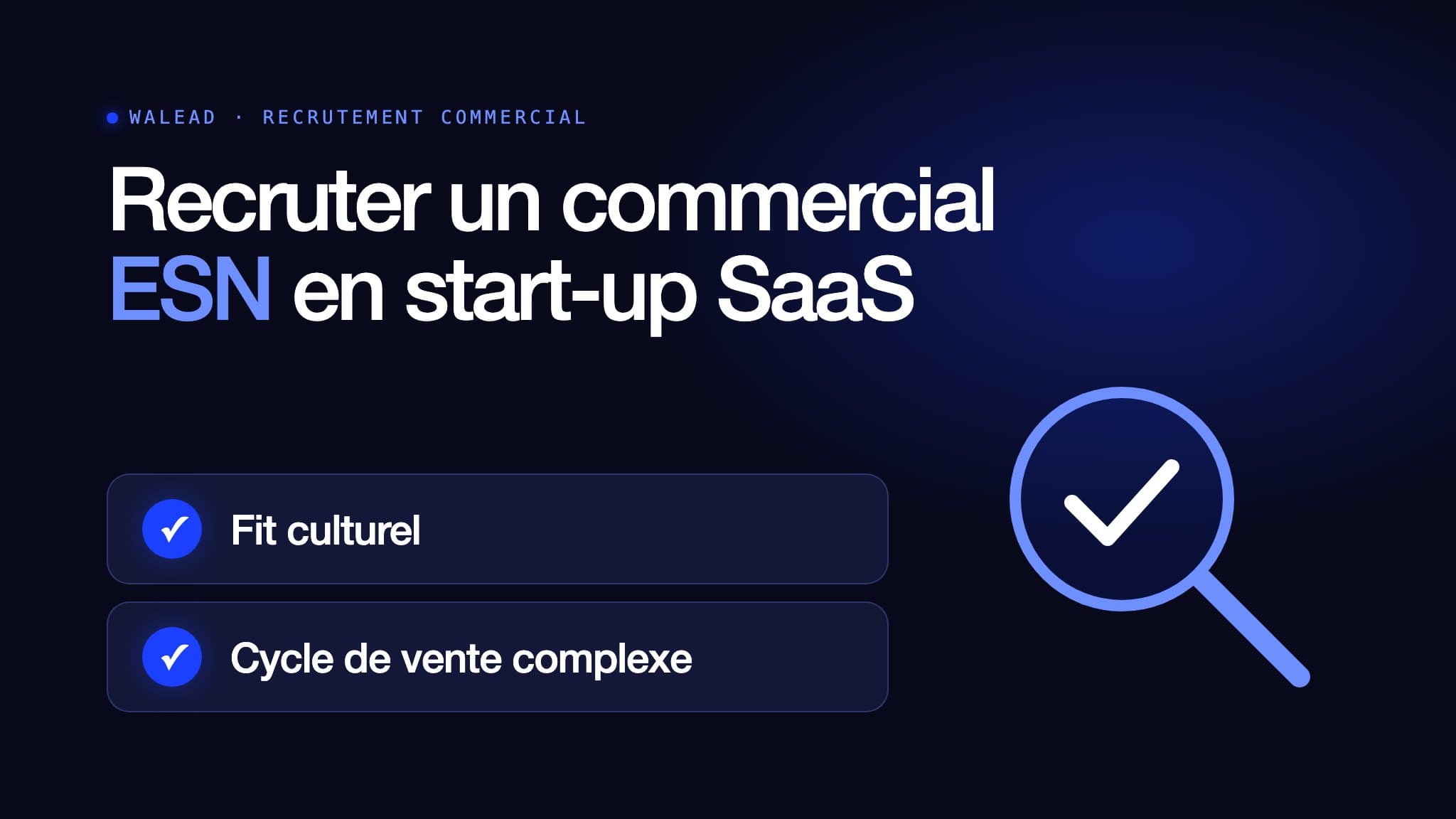
Hiring an ESN salesperson (from an IT services firm) for a SaaS start-up can be a very good choice, provided you check two points. They bring rare strengths: hunting, the habit of large accounts, and sometimes a fine knowledge of a sector. But they have to move from short cycles to long sales, with several stakeholders, in a younger and more structured culture. So check first their cultural fit and their ability to run a complex sales cycle.
Hiring an ESN salesperson: what they already know how to do
An ESN salesperson sells consultants or freelancers to companies with a specific need. That job gives them reflexes that are useful in a start-up:
Hunting. ESN salespeople are often big hunters: they go and find needs at customers, without waiting for them to come.
Large accounts. They know their customs and decision circuits, and they are at ease in face-to-face meetings.
Responsiveness. In an ESN, placing a freelancer can be decided in 48 hours. They have a sense of urgency.
Knowledge of a sector. They sometimes know a sector and its players very well, because they have been selling into it for years.
Example: a salesperson who has been placing consultants at banks for five years knows their IT departments, their buyers and the way they decide.
What changes for them in a SaaS start-up
Moving to SaaS, they change product, but also way of selling:
A longer cycle. You have to demo the software, sometimes have it tested, then wait for the decision.
Several stakeholders. The user, their manager, the technical team, procurement: each one has to be convinced.
A structured method. Many SaaS teams qualify every opportunity with a method such as MEDDIC, and track everything in their CRM.
Another measure of performance. They no longer count consultants placed, but ARR (annual recurring revenue) signed and upsell.
Another culture. Younger and more desk-based, with more remote sales than on-site meetings.
Example: in an ESN, they signed an engagement with a single manager within a few days. In SaaS, they will have to convince that manager, their technical team and procurement, over several weeks.
We detail these differences in our article ESN salesperson vs SaaS salesperson: what really changes.
The two points to check first
When we receive a salesperson coming from an ESN, we check two things first.
Cultural fit. Will they be able to work in a younger, more desk-based team with a structured sales method? Present your way of working as it is, and have them meet the team.
The ability to run a complex sales cycle. Have they already led a long sale, with several decision-makers? Ask for a precise example: how many people, how long, what got stuck and how they unblocked the situation.
If these two points are solid, their other strengths transfer well.
Positive signals to look for on their CV
Three signals show that an ESN salesperson has a good chance of succeeding in SaaS:
New customers signed, and not just an inherited portfolio: that is proof they can hunt.
Sales with several stakeholders, for example at large accounts, with procurement or a technical department in the loop.
Sector expertise that matches your market: healthcare, banking or industry, if those are your customers.
Example: a candidate writes "12 new accounts opened in two years in industry". If you sell to industrial companies, that is a strong signal, even if they have never sold software.
A real case: the hunter who knew healthcare
For a client in healthcare, there were few SaaS profiles in its market. So we went looking in ESNs. The profile we found had much more to offer: they were a hunter, with a very fine knowledge of the healthcare players.
That is a rare asset in this sector, where there are many farmers (salespeople who grow their existing customers) and very few hunters (who go and win new ones).
What to take from it: when SaaS profiles are rare in your market, an ESN salesperson who knows your customers can bring more than a SaaS profile who does not know your sector.
Questions to ask in the interview
Four questions to test the two priority points:
"Tell me about your longest sale: how many people did you have to convince, and in how long?"
"How do you know an opportunity is worth pursuing?"
"How many new customers did you sign last year, and how did you find them?"
"What attracts you to a start-up, and what might you miss from the ESN?"
To score all candidates' answers on the same criteria, use a sales hiring scorecard.
Frequently asked questions about hiring an ESN salesperson
Can an ESN salesperson sell software?
Yes, if they can run a long and complex sales cycle, with several stakeholders. Check it in the interview with a concrete example of a long sale.
What should you check first in a salesperson from an ESN?
Two points: their fit with the culture of your start-up, younger and more structured, and their ability to run a complex sales cycle. Their usual strengths, hunting and large accounts, transfer well.
Should you prefer a SaaS salesperson to an ESN salesperson?
Not always. When SaaS profiles are rare in your market, an ESN salesperson who knows your customers well can bring more, especially if they are a hunter.
A salesperson to hire for your SaaS start-up? Let's talk
We assess profiles from ESNs and profiles that have already worked in SaaS on the same criteria. Book a call: we start from your market and your sales cycle to choose the right profile. To compare pay, see our Salaries page.