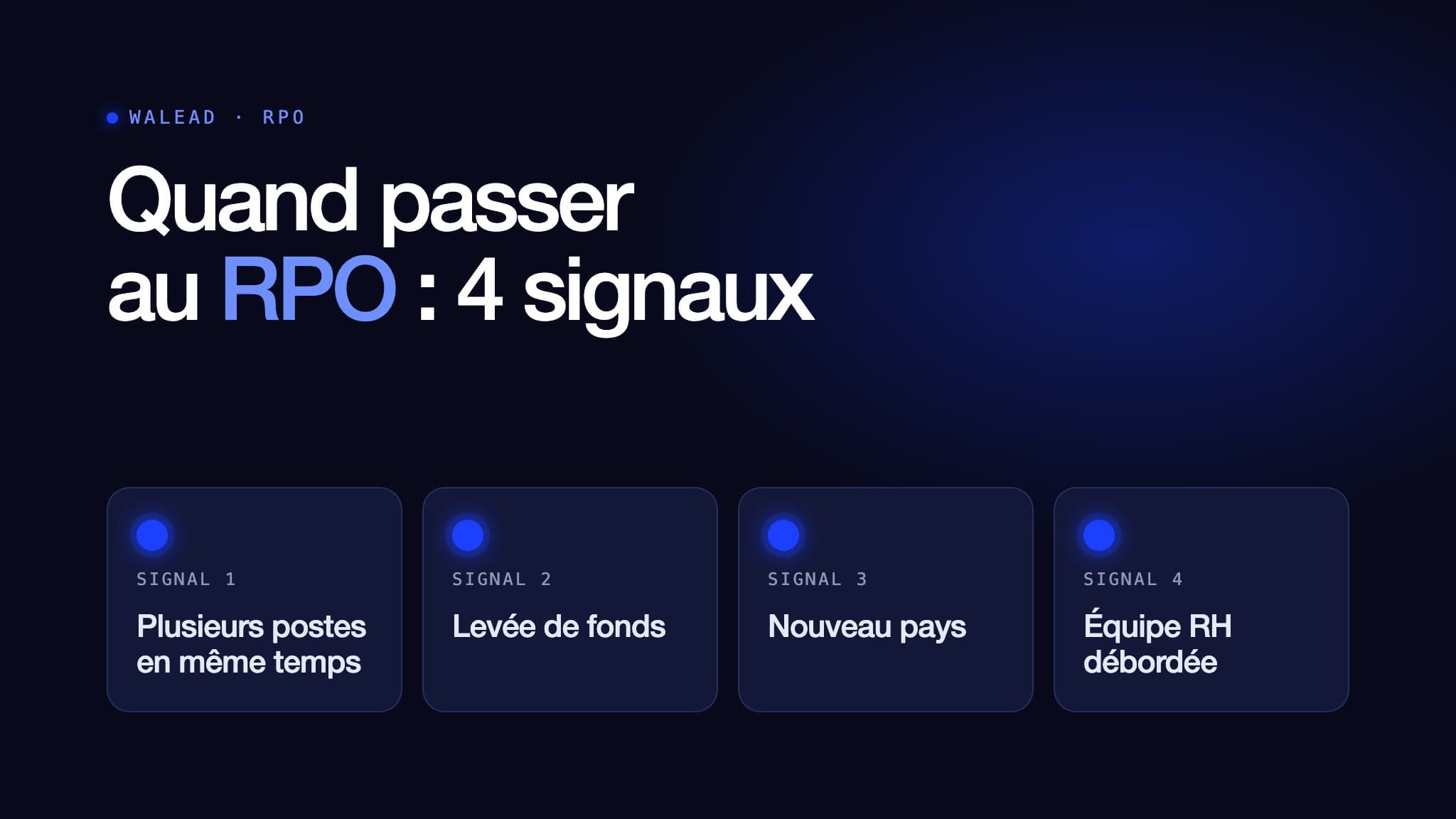
Outsourcing recruitment to an RPO becomes relevant when you need to hire several salespeople at the same time, over several months, and faster than your team can. Four signs show it: several roles open in parallel, a fundraise or strong growth, the opening of a country, an HR team that can no longer keep up. Conversely, for a single one-off role, success-based recruitment remains the best choice. Here is how to recognize the right moment.
When to outsource recruitment: the benchmark to remember
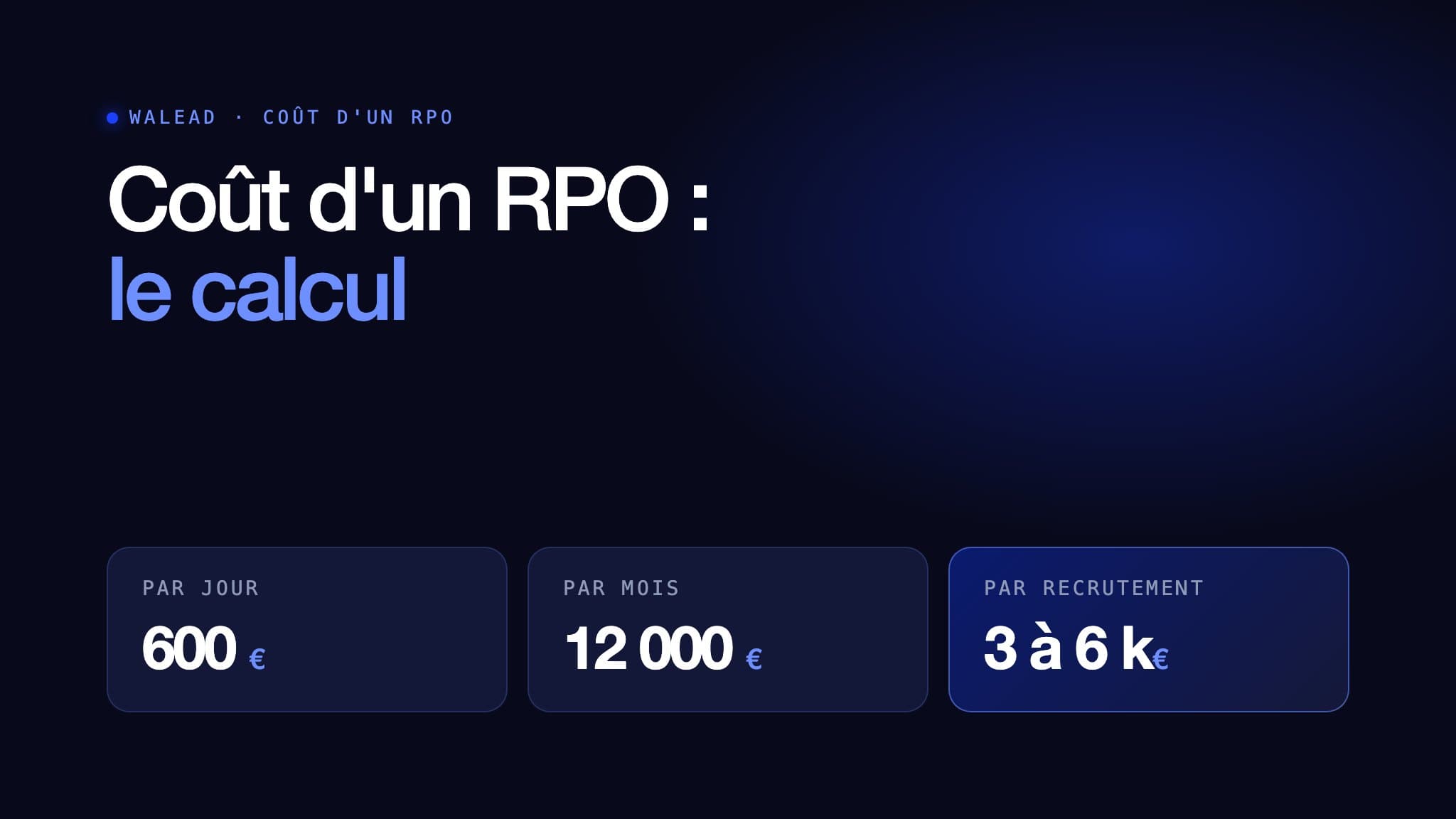
RPO (embedded recruitment) gives you a recruiter dedicated full time to your company, from €600 per day at Walead, or about €12,000 per month at that rate. Their target: at least 2 hires per month, and up to 4.
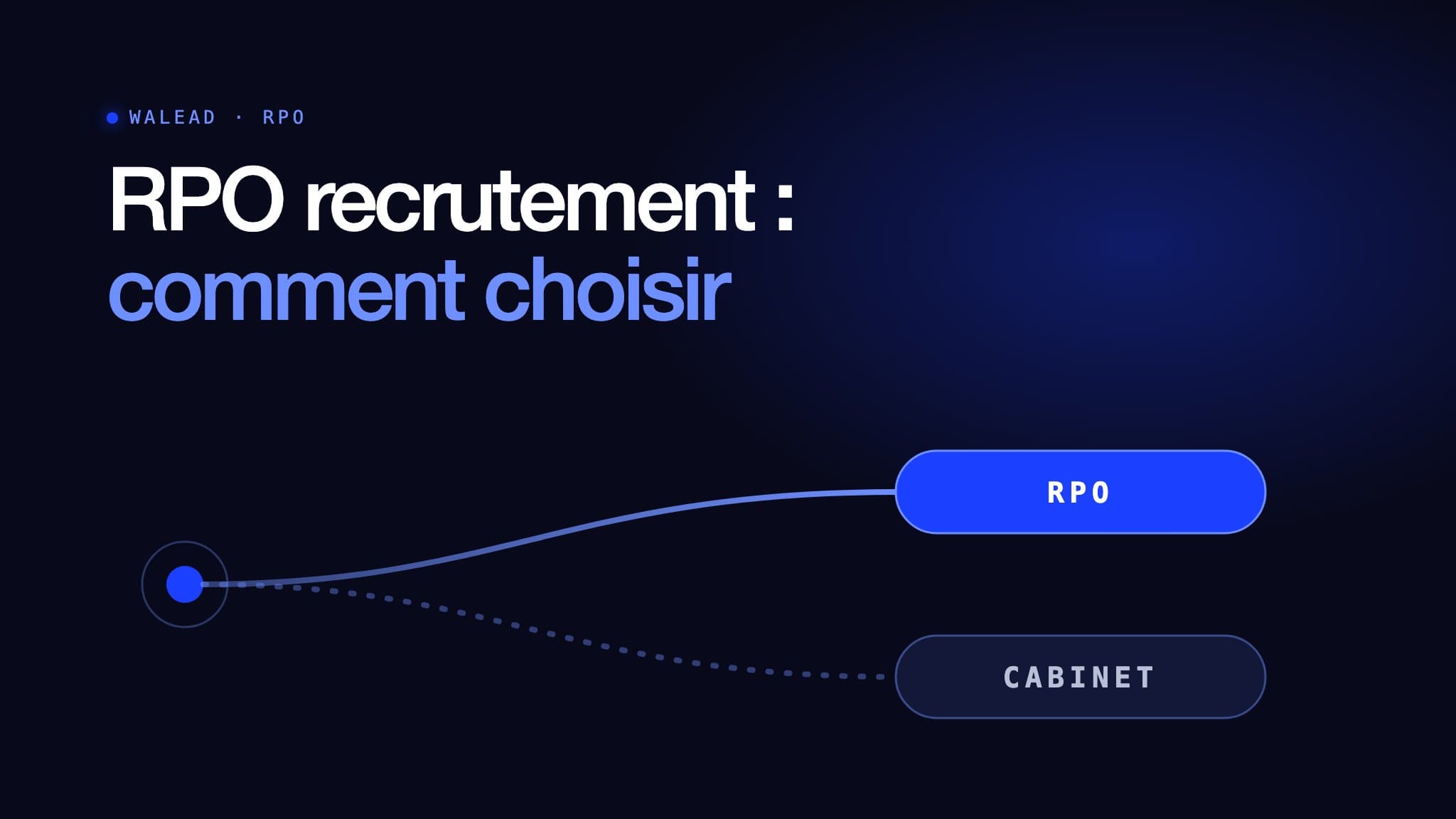
The benchmark is therefore simple: if you have at least 2 hires per month to make over several months, RPO becomes the most attractive option. In a context of strong growth, with demanding hires, it is often the best model, because it costs less per hire than success-based recruitment.
Example: with 6 salespeople to hire in three months, you are at 2 hires per month. That is the minimum target of an RPO engagement.
Sign 1: several sales roles to fill at the same time
On success, each role is a separate assignment, with its own invoice. When you open five or ten Sales roles at once, the assignments and invoices add up. With RPO, a single recruiter runs all these hires in parallel, in one process. One process also means the same criteria for every candidate, for example with a sales hiring scorecard.
Example: you open 6 roles for next quarter: 4 SDRs and 2 Account Executives, all experienced. On success, at 22% of gross annual compensation, the bill reaches about €79,200 (4 × €11,000 + 2 × €17,600, according to our Salaries page). With RPO, three months of a full-time recruiter cost about €36,000.
Sign 2: a fundraise or strong growth
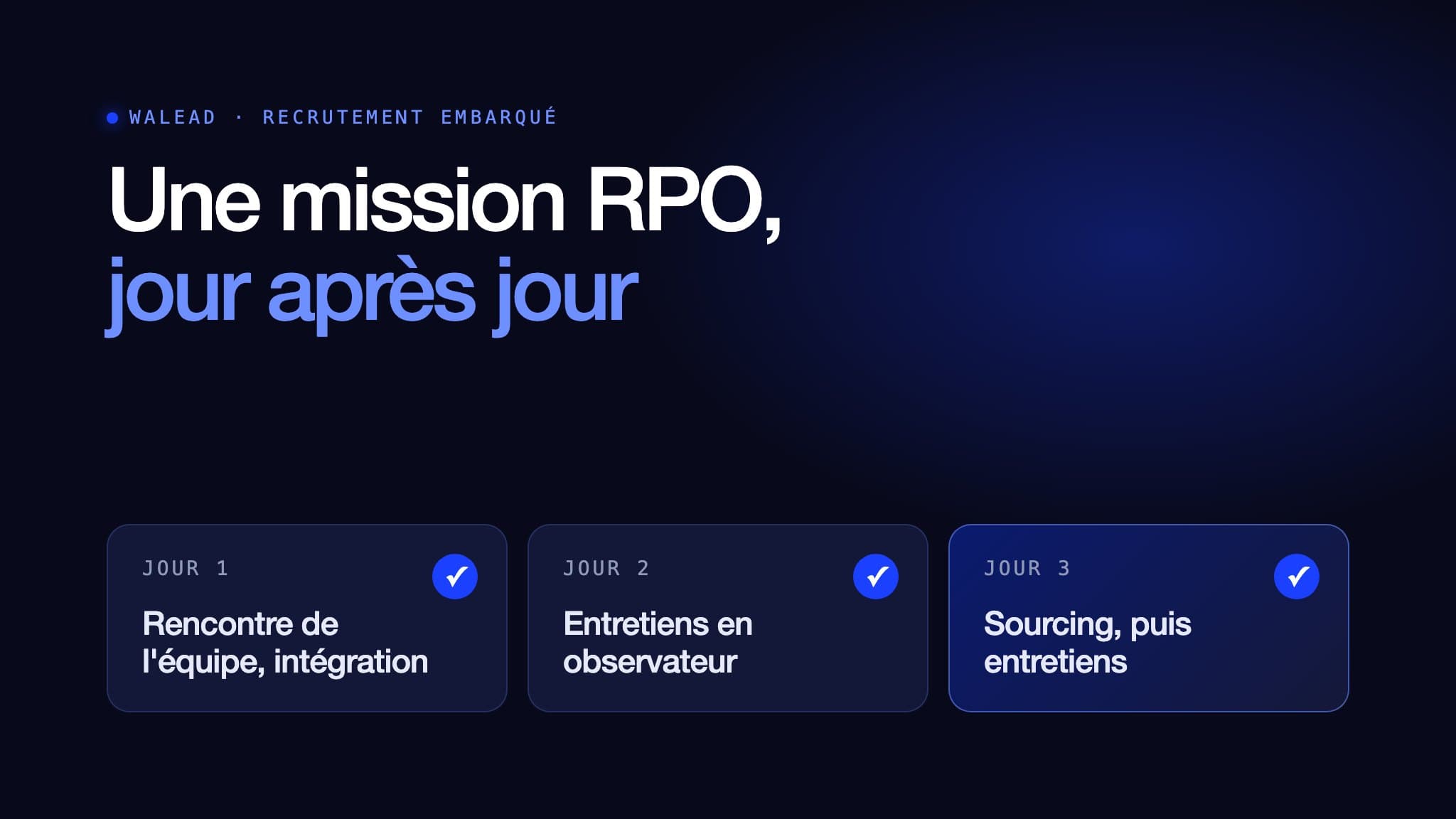
After a fundraise, the hiring plan speeds up: the money raised has to be turned into revenue, so often into salespeople. Every month without the planned salespeople is a month of sales missing from the plan presented to investors. RPO answers that urgency. An engagement can usually start within a week, with a recruiter available right away and operational from the first days.
Example: Ringover had to grow from 150 to 300 employees in under two years. With RPO, we hired its Sales teams: 120 hires in 3 years, from SDR to VP Sales.
Sign 3: opening a new country
Hiring in a country you do not know requires knowing its candidate market, its salary levels and its customs. The job ad, the outreach message and the interviews also have to be adapted to each market. A recruiter who already works in that market spares you from learning everything alone. Walead recruits in ten countries, including the United Kingdom, the United States, Spain, Germany, the United Arab Emirates and Saudi Arabia.
Example: at Ringover, we hired the Sales teams in four countries: the United Kingdom, the United States, Spain and France.
Sign 4: an HR team that can no longer keep up
In a start-up of 20 to 50 people, hiring often rests on a single HR person, or on the founders themselves. When roles pile up, applications wait, interviews slip, and the best candidates sign elsewhere. Hiring then becomes a brake on growth.
RPO adds a full-time recruiter without a hire. They work in your applicant tracking system (ATS) and on your Slack, like a member of the team. They can also reinforce an existing team: at Voodoo, we worked for a year and a half alongside an in-house team of 15 recruiters, going in turn to the four departments where the need was greatest.
When RPO is not the right answer
RPO does not suit every need:
A single role to fill: success-based recruitment costs less. For an experienced SDR, expect about €11,000 on success, against about €12,000 for a single month of RPO.
A key role, to be handled as a priority: the exclusive mandate, at 20%, gives you absolute priority on the role.
A short need, to test a market: a freelance salesperson may be enough before hiring permanently.
Our advice: look at your hiring plan for the next six months, not just the role of the moment. It is the total volume that decides the option.
Frequently asked questions about outsourcing recruitment
When should you outsource recruitment?
When you need to hire faster than your team can: several roles at once, after a fundraise, or when opening a country. With at least 2 hires per month over several months, RPO becomes the most attractive option.
From how many roles should you switch to RPO?
A good benchmark: at least 2 hires per month, over several months. Below that, success-based recruitment often costs less. For better-paid roles, such as experienced Account Executives, RPO can be profitable from the first hire of the month.
Does RPO replace an HR team?
No, it reinforces it. The RPO recruiter works with your team, in your tools, and can switch departments depending on the priorities of the moment.
The right time to switch to RPO? Let's talk
If you recognize one or more of these signs, book a call: together we look at your hiring plan and the option that fits it. To understand how RPO works, read our article RPO recruitment: how it works and when to choose it over an agency. For the cost calculation, read RPO cost: the calculation for hiring your salespeople. To compare our options, see our Pricing page.